


 Cart
Cart
 sales@molnova.com



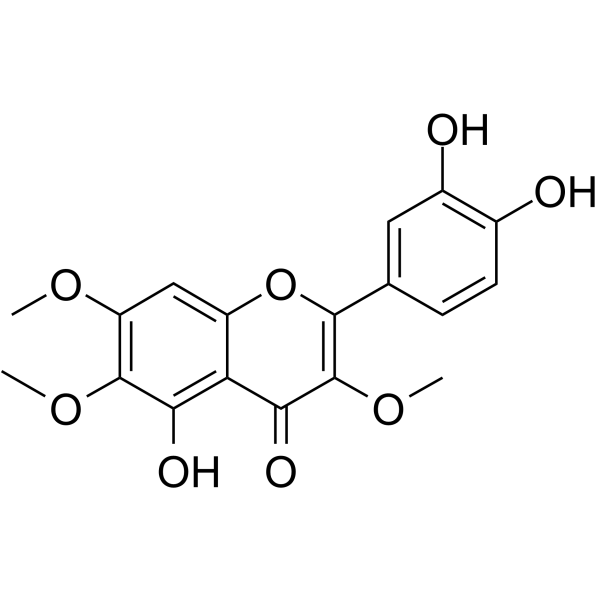
Chrysosplenol D
CAS No. 14965-20-9
Chrysosplenol D( —— )
Catalog No. M29115 CAS No. 14965-20-9
Chrysosplenol D, an efflux pump inhibitor that can potentiate the activity of commercially important antibiotics and antimalarials.
Purity : >98% (HPLC)
 COA
Datasheet
HNMR
HPLC
MSDS
Handing Instructions
COA
Datasheet
HNMR
HPLC
MSDS
Handing Instructions
| Size | Price / USD | Stock | Quantity |
| 5MG | 237 | Get Quote |


|
| 10MG | 372 | Get Quote |
|
| 25MG | 608 | Get Quote |
|
| 50MG | 849 | Get Quote |
|
| 100MG | Get Quote | Get Quote |
|
| 200MG | Get Quote | Get Quote |
|
| 500MG | Get Quote | Get Quote |
|
| 1G | Get Quote | Get Quote |
|
Biological Information
-
Product NameChrysosplenol D
-
NoteResearch use only, not for human use.
-
Brief DescriptionChrysosplenol D, an efflux pump inhibitor that can potentiate the activity of commercially important antibiotics and antimalarials.
-
DescriptionChrysosplenol D, an efflux pump inhibitor that can potentiate the activity of commercially important antibiotics and antimalarials.(In Vitro):Trace amounts of the antimalarial sesquiterpene lactone artemisinin may account for the activity of the n-hexane fraction but only the methoxylated flavonoids artemetin, chrysoplenetin, Chrysosplenol D and cirsilineol can account for the activity of the chloroform extract. These purified flavonoids were found to have IC50 values at 2.4 - 6.5 x 10(-5)M against P. falciparum in vitro compared with an IC50 value of about 3 x 10(-8)M for purified artimisinin. Chrysosplenol D inhibited the viability of the MDA-MB-231 TNBC cells after 48 h with IC50 values of 11.6 μM. The most sensitive cell line towards Chrysosplenol D was the non-small-cell lung carcinoma (NSCLC) cell line A549 and the most resistant one was the androgen-independent prostate carcinoma cell line PC-3. The hormone-sensitive breast cancer cells MCF7 exhibited high resistance towards Chrysosplenol D treatment.(In Vivo):In mice, administration of Chrysosplenol D (1 and 1.5μmol/cm^2) inhibited croton oil-induced ear edema (37.76-65.89%, all P<0.05) in a manner similar to indomethacin (0.5, 1 and 1.5μmol/cm^2; 55.63-84.58%). Chrysosplenol D (0.07, 0.14 and 0.28mmol/kg) protected against LPS-induced systemic inflammatory response syndrome (SIRS) in mice (all P<0.05), in a manner similar to dexamethasone (0.03mmol/kg). Chrysosplenol D suppressed LPS-induced release of IL-1 beta, IL-6 and MCP-1, inhibited cell migration, and reduced LPS-induced IκB and c-JUN phosphorylation in Raw264.7 cells.
-
In Vitro——
-
In Vivo——
-
Synonyms——
-
PathwayApoptosis
-
TargetIL Receptor
-
RecptorIL Receptor
-
Research Area——
-
Indication——
Chemical Information
-
CAS Number14965-20-9
-
Formula Weight360.318
-
Molecular FormulaC18H16O8
-
Purity>98% (HPLC)
-
SolubilityIn Vitro:?DMSO : 50 mg/mL (138.77 mM)
-
SMILESCOc1cc2oc(-c3ccc(O)c(O)c3)c(OC)c(=O)c2c(O)c1OC
-
Chemical Name——
Shipping & Storage Information
-
Storage(-20℃)
-
ShippingWith Ice Pack
-
Stability≥ 2 years
Reference
molnova catalog



related products
-
Anakinra
Anakinra (Raleukin) is a cytokine inactivator and interleukin 1 receptor antagonist that can be used to study secondary phagocytic lymphohistiocytosis and rheumatoid arthritis.
-
Siltuximab
Siltuximab(CNTO-328) is a monoclonal antibody with anti-tumor activity targeting IL-6 for the study of giant lymph node hyperplasia (MCD) and COVID-19.
-
Vunakizumab
Vunakizumab (Anti-Human IL17A Recombinant Antibody) is a human IgGκ monoclonal antibody that specifically targets and inhibits IL-17A's receptor interaction, making it useful for researching autoimmune conditions such as psoriatic arthritis, ankylosing spondylitis, multiple sclerosis, and inflammatory arthritis .
